

 By
By Discover home remedies for acne and pimples naturally with scientific explanations. Learn how ingredients like aloe vera, honey, and turmeric help reduce bacteria, inflammation, and excess oil for clearer skin
Natural remedies work by targeting bacteria, inflammation, and excess oil production.
Causes of Acne and Pimples (Scientifically Explained)
Acne doesn’t just happen randomly—it’s usually the result of multiple internal and external factors working together. Understanding the causes helps in choosing the right home remedies.
Understanding the root causes is essential before trying home remedies for acne and pimples naturally, because each remedy works on specific factors like oil production, bacteria, and inflammation.
1.Excess Sebum (Oil) Production
The skin has sebaceous glands that produce sebum, an oily substance that keeps the skin hydrated. However, when these glands become overactive, excess oil mixes with dead skin cells and clogs pores.This creates an ideal environment for bacterial growth and leads to pimples.
2.Bacterial Growth
A bacterium called Cutibacterium acnes naturally lives on the skin. When pores are clogged with oil and debris, this bacterium multiplies rapidly.The immune system reacts to this, causing inflammation, redness, and pus-filled acne.
3.Hormonal Changes
Hormones—especially androgens—increase oil production in the skin. This is why acne is common during:
- Puberty
- Menstrual cycles
- Stress
- Hormonal imbalances-Increased hormones = more oil = higher chances of clogged pores.
4.Diet and Food Habits
Certain foods can influence acne by affecting hormones and inflammation:High sugar foods (spikes insulin),Dairy products,Oily and processed foods
5.Stress
Stress triggers the release of cortisol, a hormone that can increase oil production and inflammation.This is why many people notice breakouts during stressful periods.
6.Clogged Pores from Products
Using heavy or comedogenic skincare products can block pores. Poor cleansing habits can also allow dirt, oil, and dead cells to accumulate.This leads to blackheads, whiteheads, and pimples.
7.Dead Skin Cell Buildup
The skin naturally sheds dead cells, but when this process is disrupted, the cells can accumulate and clog pores.This blockage is one of the main triggers for acne formation.
8.Genetics
If your parents had acne, you are more likely to experience it too. Genetics can influence:Oil production,Skin type,Sensitivity to hormones.
9.Poor Lifestyle Habits
Daily habits can silently worsen acne:
- Not washing face regularly
- Touching or picking pimples
- Lack of sleep
- Dirty pillowcases
“Now let’s look at home remedies that target these root causes naturally…”
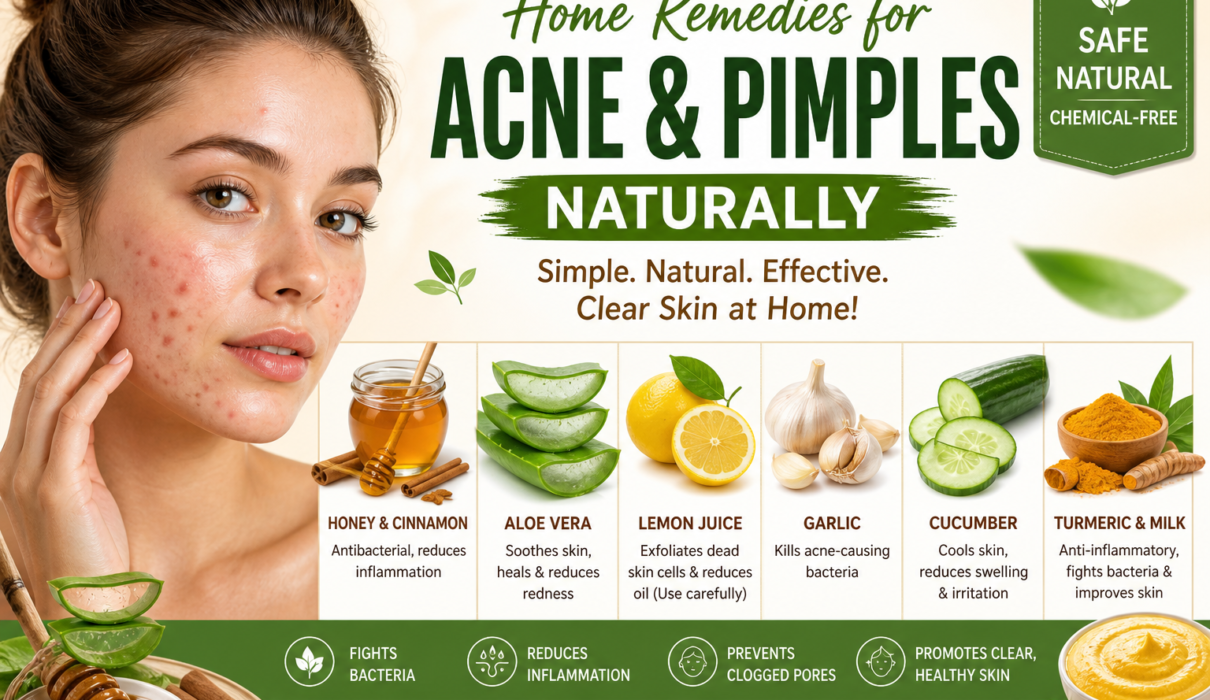
Top 6 Home Remedies for Acne and Pimples Naturally
While many articles make exaggerated claims, this guide focuses on home remedies for acne and pimples naturally that are simple, practical, and supported by basic scientific understanding. These remedies are not overnight cures, but they work by targeting key causes of acne such as excess oil, bacterial growth, and inflammation. The goal here is not to overpromise results, but to explain home remedies for acne and pimples naturally in a realistic way—so you can use them safely and consistently. With the right approach and patience, these methods can help improve skin health over time without relying on harsh chemicals.
1.Honey and Cinnamon Remedy
Honey is naturally rich in antibacterial compounds like hydrogen peroxide and flavonoids, which help inhibit the growth of acne-causing bacteria. It also acts as a humectant, meaning it retains moisture and supports skin healing. Cinnamon contains cinnamaldehyde, a compound known for its antimicrobial and anti-inflammatory properties, which helps reduce redness and swelling associated with pimples. Together, they work to calm inflamed skin while limiting bacterial activity.
How to use:
To use this remedy, mix about one teaspoon of honey with a small pinch of cinnamon to form a smooth paste. Apply it gently to the affected areas and leave it on for around 10–15 minutes before rinsing with lukewarm water. Using this remedy two to three times a week is usually sufficient to see gradual improvement without irritating the skin.
2.Aloe Vera Gel
Aloe vera contains active compounds such as acemannan and gibberellins that promote wound healing and skin repair. It also exhibits natural anti-inflammatory effects, which help reduce redness and irritation. Additionally, aloe vera has mild antibacterial properties and contains salicylic acid-like components that may assist in keeping pores clear.
How to use:
For best results, extract fresh aloe vera gel and apply a thin layer directly onto clean skin, especially on acne-prone areas. It can be left on overnight to allow the skin to absorb its soothing compounds. Regular daily use helps maintain skin hydration and gradually reduces inflammation.
3.Lemon Juice (Use Carefully)
Lemon juice is high in citric acid, a type of alpha hydroxy acid (AHA) that helps exfoliate dead skin cells and prevent clogged pores. It also contains vitamin C, which supports skin brightening and may help reduce the appearance of acne marks. However, its strong acidity can disrupt the skin barrier and cause irritation if not used properly.
How to use:
To apply safely, dilute fresh lemon juice with an equal amount of water, then use a cotton pad to dab it lightly onto the affected areas. Leave it on for about 5–10 minutes before rinsing thoroughly. It is best used only once or twice a week, and sunscreen should be applied during the day since lemon juice can increase skin sensitivity to sunlight.
4.Garlic Treatment
Garlic contains allicin, a sulfur-based compound with potent antibacterial and antifungal properties. This makes it effective in reducing the presence of acne-causing bacteria on the skin. However, raw garlic is quite strong and can cause irritation or burns if applied directly.
How to use:
To use it safely, crush a garlic clove and mix it with a few drops of water to dilute its potency. Apply it gently to the affected areas for no more than 3–5 minutes, then rinse thoroughly. This remedy should be used sparingly, about once or twice a week, to avoid skin irritation.
5.Cucumber Face Pack
Cucumber is composed of about 96% water, making it highly hydrating and soothing for irritated skin. It contains vitamin C and caffeic acid, which help reduce inflammation and calm swelling. Its mild astringent properties may also help tighten pores and refresh the skin.
How to use:
To use, blend fresh cucumber into a smooth paste and apply it evenly across the face or affected areas. Leave it on for 15–20 minutes before rinsing with cool water. This remedy can be used frequently, even daily, as it is gentle and suitable for most skin types.
6.Turmeric and Milk Paste
Turmeric contains curcumin, a bioactive compound known for its strong anti-inflammatory and antimicrobial effects. It helps reduce the inflammatory response associated with acne and may inhibit bacterial growth. Milk contains lactic acid, a gentle exfoliant that helps remove dead skin cells and improve skin texture.
How to use :
To prepare, mix a small amount of turmeric with milk to create a thin paste. Apply it evenly to the skin and leave it on for about 10–15 minutes before washing off. Using this remedy two to three times a week can help improve skin clarity over time while keeping irritation minimal.
Conclusion
Home remedies can be a helpful and gentle way to manage mild to moderate acne, especially when they are used consistently and with the right understanding. The home remedies for acne and pimples naturally discussed above work by supporting the skin’s natural healing process—reducing excess oil, calming inflammation, and limiting bacterial growth. However, it’s important to remember that these methods do not provide instant or guaranteed results, and their effectiveness can vary depending on individual skin type and the severity of acne.
If your acne is persistent, painful, or not improving over time, it’s important to seek guidance from a qualified dermatologist. Combining home remedies for acne and pimples naturally with professional advice ensures a safer and more effective approach to long-term skin health.